top of page

Item List

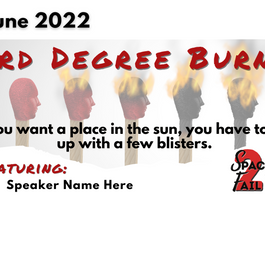
3rd Degree Burns: If you want a place in the sun, you've got to put up with a few blisters.

One of my friends from Europe observed, "Americans apologize a lot, including for things that they don't need to apologize for, like accidentally blocking the way." Karen Viani reminds us that standing up for our Value is another thing we should NOT be apologizing for. As we start a new year in the midst of the Great Resignation, it is important to remember that this is an opportunity to Renegotiate, ReInvent, and ReImagine your role, career, and needs, not simply ReShuffle to another dead-end space."  However, whether you choose to stay or leave, you should NEVER apologize for standing up for You.

Apology Not Accepted

Karen Hathaway Viani

There is nothing quite like the holiday to bring out joy, togetherness, and creativity. But when your Secret Santa gift reduces your co-worker to tears and the programming contest you won on Friday, results in a visit from the head of the FBI on Monday, the office holiday party may not be your favorite activity. We have 3 great stories to close out the year. Learn something new about unexpected consequences, the value of leaders who have your back, and know that you aren't alone in the awkward space that is Professional Failure.

Beware of Geeks Bearing GIfts

Zach Zabrowski, Karen Leight, Martin Wilsey

There is no stopping Alan Rubin when it comes to managing through, over, around, and across anything standing between him and success.  If he were a squirrel, he would be Scrat from the movie Ice Age. While Alan may not be faced with earthquakes, glacial melt-off, or volcanic eruptions, neither COVID nor bureaucrats shut down his businesses as he relentlessly innovated, negotiated, and re-aligned his business.

Decision Paralysis: Silence, Fear, & Flat Squirrels

Alan Rubin

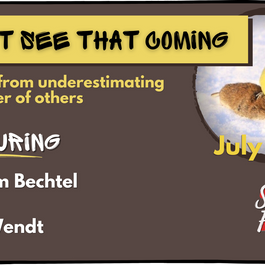
I thought we would hear stories about overlooked - but well-connected - people who use their highly-tuned political power to undermine our projects and careers. Instead, Doug and Brigham remind us that the biggest cause for failure is underestimating our team members -- whether they are peers or subordinates. By managing them through tightly controlled roles and giving them little leeway to exercise their own judgment and initiative, we fail to realize the full set of opportunities that are available. Why? Trust. We need to trust that we hired great people, created high-performing teams, and most of all, Trust that they, too, know how to manage the daily political, environmental, organizational, and technical ambiguities that are the minefields of our professional lives. Doug Wendt and Brigham Bechtel showed us what really matters to ensure success, manage unforeseen quagmires, and quickly recover from failure -- Trust. 
 
Need more proof? An HBR study found that people in high-trust companies state they have 74% less stress, 106% more energy at work, 50% higher productivity, are 76% more engaged, and suffer from 40% less burnout than low-trust companies.   
 
Brigham recommends reading Grant’s Biography to learn the subtle art of writing goals instead of orders to better manage ambiguity in the field and reminds us that great leaders are always training their successors. Communicating quality and consistency to your client are key to Doug’s success, but to really succeed, you need to remove the alarms, notifications, and virtual “guard rails” that keep us from achieving more. Brad Leve reminds us that even in flying, allowing your students to experience the discomfort of the unknown (or not bailing them out), is essential to earn your wings.

Didn't see that coming: Failures from underestimating the power of others

Brigham Bechtel, Doug Wendt

How much would you risk for your beliefs? How far would you go to help children out of poverty? Would you risk going to prison to shine a light on graft and corruption? For James Gagle, standing up for the powerless against organizations that act with impunity has been a lifelong calling. However, in his 20s, it almost cost him everything. Join us to see what true courage looks like and how hubris can catalyze chain reactions capable of ending careers and freedom.

Domino Effect: It all started with one Failure

James Gagle

Failure from the front: Blundering through the C-Suite

Future CEOs

We all have those Foot-In-Mouth F-Ups. Sometimes, they look like, “Yeah, I’m good,” when the truth is killing you. Thank you, Andrew Simpson, for sharing your journey through the toxic aftermath of Traditional Masculinity that began by simply doing what you always dreamed of -- serving in the Army. Your courage helped each of us understand how “Yeah, I’m good” conceals and exacerbates years of pain, despair, and fear. Moreover, you showed us how we can step up and break that cycle, build networks of trust, and give people the grace to NOT be Super Heroes every moment of the day.
 
“Yeah, I’m good.” “I’m fine.” “I’m ok.” The tacit responses we all listen for when we ask, “How are you?” In fact, we do it so often; anything other than those responses is akin to running into a social brick wall. Even when faced with someone in obvious physical or emotional pain, we
accept the “Yeah, I’m good” and move on to the next thing. Pulling them aside, looking them in the eye, and giving them the space to truly open up, requires us to stop our speed walk to the next meeting, clear our minds of the car repair bill that needs to be paid, and give the other person your full attention. But we are busy, double-booked, and maxed out, and they know they can call the Employee Assistance Program. We smile, nod, tell them they can always come to you if they’re having issues, and hurry on to the meeting you’re already late for. After all, everyone has problems, and you’re just a team lead, staff member, admin, CEO. 
 
Except you’re not “just” anything. You’re a member of a team of people that are supposed to trust each other, have each other’s backs, celebrate the wins, and work through the failures. The first pillar of Trust is Empathy. When we choose to obliquely ignore the pain of others, we are undermining that trust. What makes a good leader? The courage to stop, listen deeply, and not accept, “Yeah, I’m good” as an answer. Building Trust requires Empathy for our limitations and allowing others in to help

Foot-in-Mouth Failures

Andrew Simpson

From Hero to Zero: Falling off the Pedestal

Yolita Wildman Nugent

Placeholder Image

Let me overthink this. . . and really Mess it up

Andrea Goulet, Holly Babin, Scott Rubin

Placeholder Image

Money is the Root of All Failures

Richard Brody, John Fuisz, Brad Leve, Mark Jacobsen

Placeholder Image

Not my 1st Rodeo

Featuring: TBD

© 2022 by Dragonfish, LLC

All rights reserved

Connect  |  Collaborate  |  Change the World

DF 2022 dkr RD.tif
bottom of page